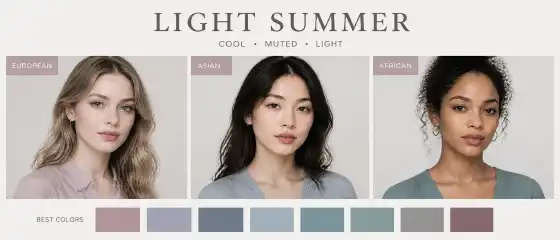
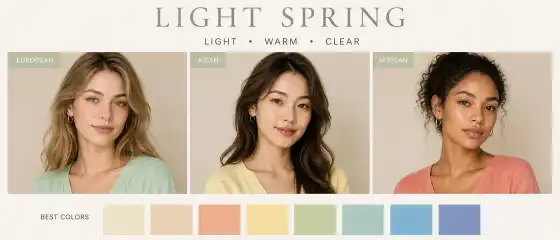
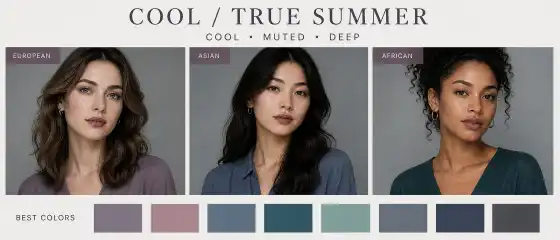
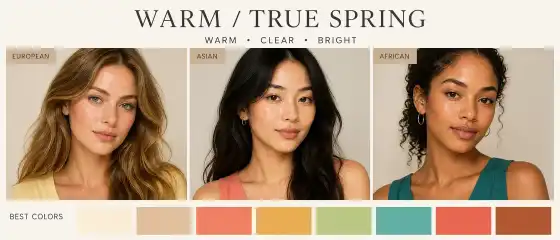
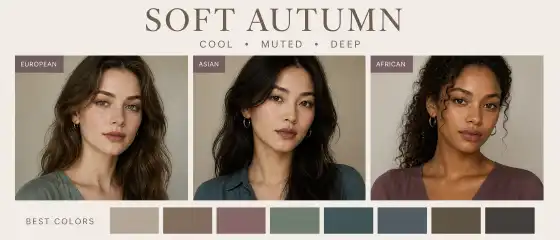
Discover how the Light Summer color palette can enhance your natural beauty with its cool, soft, and airy shades, perfect for a fresh and harmonious look.
Light Summer: what this color type looks like and why you need it
If you want to quickly understand which colors make your face look fresher, softer, and more "expensive," the article about Light Summer will be useful. This color type often appears light, gentle, and airy: the appearance seems to be illuminated by soft daylight. Properly chosen shades help maintain this natural freshness, while overly heavy and loud colors can, on the contrary, clash with the appearance and weigh down the image.
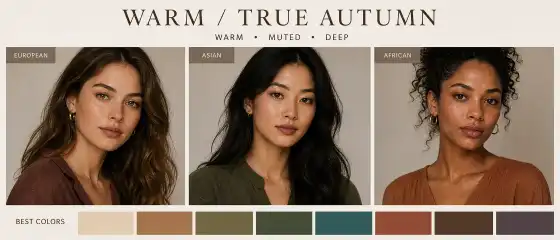
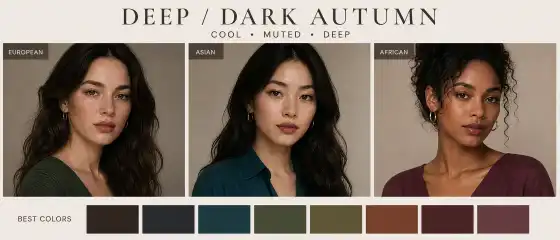
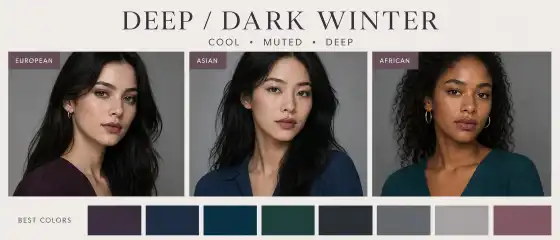
It's important to remember: Light Summer is not tied to one country, ethnic group, or skin color. It can be found in people with very different skin tones, eye colors, and hair colors. The essence here is not in the "lightness" of the face itself, but in the combination of temperature, contrast, depth, and saturation of the appearance.
Brief portrait of the color type
Temperature: cold or neutral-cold. Warm yellowish shades are usually less harmonious than cool and pure ones.
Contrast: low or medium-low. Features do not appear sharply divided, the overall effect is soft.
Depth: light. Dark and heavy colors often dominate the appearance.
Saturation: muted, but not "dusty" to the point of "gloomy" grayness. Fresh, soft, slightly smoky shades work better.
Overall impression: lightness, coolness, delicacy, transparency, freshness.
Imagine an early summer morning, a gentle sun, soft air, and light that doesn't hurt the eyes. This is very close to the visual character of Light Summer.
Visual guide to palette and style

How to understand if this is your color type
Most often, Light Summer is recognized by the fact that the face looks better in soft, cool, and light shades rather than in heavy and warm ones. But it's not worth focusing on just one sign — it's better to look at the overall effect.
Light, cool, slightly muted colors suit you: sky blue, lavender, pink-ash, mint-cool, smoky lilac.
In very warm shades, the skin may appear tired, yellowish, or lost.
Pure black, deep brown, heavy burgundy, or bright orange may look too harsh.
Soft transitions work best, rather than sharp contrasts.
Things often look harmonious on you as if slightly "diluted" with white or gray pigment.
At the same time, Light Summer can be found in people with porcelain, olive, tan, medium, or darker skin, with blonde, chestnut, dark blonde, or even very dark hair. The color type is determined not by the "default hair color," but by how well the appearance is supported by cool, light, and soft shades.
Best colors
The Light Summer palette is built around cool freshness, softness, and light. Good news: these are very wearable colors that easily fit into both everyday wardrobes and more composed looks.
Basic colors
Light shades
sky blue;
icy rose;
lavender mist;
light lilac;
pastel turquoise with a cool tint;
mint, but not "juicy," rather soft;
pearl pink-gray.
Dark shades
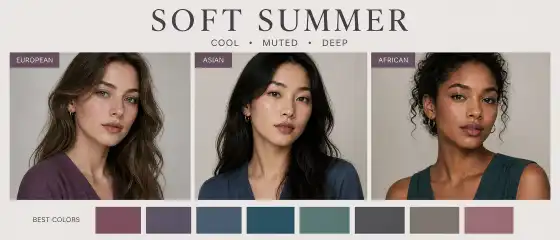
Light Summer also suits dark tones, but they work better if they remain cool and not too heavy.
Accent colors
cool raspberry;
dusty fuchsia;
icy pink;
aquamarine with a grayish haze;
cool lavender;
soft cornflower blue;
cranberry, as long as it's not too warm and doesn't lean towards brick.
Neutral colors
light gray;
gray-blue;
cool milky;
ashy beige;
soft dark blue;
cool stone gray.
In short: Light Summer suits colors that look fresh, soft, and slightly "blurred," but not dirty or heavy.
Colors to be cautious with
Some shades are not necessarily "forbidden," but near the face, they may work less successfully because they draw attention to themselves or make features harsher.
Too warm yellow: mustard, golden honey, ochre — can enhance the yellowness of the skin.
Orange and coral-orange: often seem too warm and active.
Heavy black: can create too sharp a contrast, especially in the upper part of the look.
Dull dark brown: sometimes looks heavy and "eats up" softness.
Bright tomato red: can clash with the cool nature of the appearance.
Neon shades: often too loud and disrupt the delicacy of the color type.
Very earthy colors: khaki, rust, terracotta — often better used away from the face.
If you like a certain shade, it doesn't mean you have to give it up. Sometimes it's better to move it to the bottom, accessories, or shoes, rather than placing it near the face.
Clothing and style
Light Summer especially suits styles where there is lightness, softness of lines, and absence of sharp heaviness. This doesn't mean that only "romantic" items suit you — the look can be modern and strict if the color palette remains yours.
Suitable stylistic directions
Casual: simple t-shirts, soft knitwear, light jeans, sneakers in smoky shades.
Smart casual: shirts in cool blue, straight pants in gray-blue, thin cardigan, neat loafers.
Minimal: clean lines, calm light basic colors, absence of heavy decor.
Romantic: flowing fabrics, soft folds, delicate lilac and pink-ash shades.
Natural: but in a cool and light version — linen, cotton, soft textures without coarse earthiness.
Urban: gray-blue ensembles, cool denim, laconic silhouettes.
Sporty chic: light sneakers, soft hoodies, jackets in smoky blue and silver shades.
Examples of looks
Milky white t-shirt + light gray blazer + straight jeans in a cool blue shade.
Lavender blouse + skirt in smoky blue + silver pumps or ballet flats.
Light blue knitwear + graphite pants + soft scarf in cool rose color.
Dress in a dusty turquoise shade + thin belt + silver accessories.
Cool light gray suit + top in icy rose color.
Light Summer usually suits smooth lines, light fabrics, and moderate detailing better. Too massive elements can overload the look, especially if they are also in dark or warm colors.
Makeup
Makeup for Light Summer looks best fresh, soft, and cool. The goal is not to "repaint" the face, but to emphasize natural delicacy.
Tone
choose a cool or neutral-cool undertone;
light and medium coverage that evens out the skin but doesn't create a mask;
if the skin is prone to redness, it's better to gently neutralize it rather than using too warm a tone.
Blush
Lips
Eyes
gray-brown;
taupe;
cool pink-beige;
smoky blue;
lavender;
soft gray;
muted cool green.
Too warm bronze shadows, orange-brown lipsticks, very heavy black eyeliner, and dense contouring with sharp shadows often look less successful. It's better to choose soft transitions, blending, and a light "airy" effect.
Hair color
Light Summer usually harmonizes with hair colors that have coolness, softness, and moderate lightness. It's not necessary to become a blonde—what's more important is that the hair shade doesn't look heavy or too warm.
Look good: ashy-blonde shades, cool light chestnut, smoky blonde, cool beige blonde, soft platinum-ash, cool dark blonde.
Coloring with soft transitions: cool highlights, light balayage without gold tones, "diluted" light strands that add airiness.
May clash with appearance: copper, red with pronounced warmth, golden caramel, very dark almost black if it creates too harsh a contrast.
If you like darker hair, it's better to choose cool dark blonde, soft chocolate with a gray undertone, or smoky chestnut rather than dense warm brown. This way, the look retains its softness.
Jewelry and accessories
Accessories for Light Summer are best chosen to support the cool and light nature of the appearance.
Metals: silver, white gold, platinum shade, cool matte metal. Sometimes rose gold works well if it's very delicate and doesn't lean towards obvious yellowness.
Glasses: thin frames, gray-blue, silver, transparent, smoky, soft black without a heavy effect.
Bags: gray-blue, cool beige, graphite, powdery pink, soft blue, light gray.
Scarves: lavender, pink-ash, sky blue, smoky lilac, gray-blue.
Prints: small and medium, with soft contrast, watercolor, blurred, floral without bright variegation.
Textures: satin without strong shine, soft wool, smooth cotton, thin knitwear, denim with a cool character.
Too coarse leather, massive wood, bright yellow jewelry, and very contrasting prints sometimes draw attention away and make the look less airy.
Mini wardrobe capsule
A simple capsule for Light Summer can be assembled so that items easily combine with each other and maintain a fresh appearance.
Milky white t-shirt.
Light blue shirt.
Gray or gray-blue blazer.
Straight jeans in a cool blue shade.
Pants in soft graphite or taupe color.
Sweater in lavender or smoky pink shade.
Midi skirt in dusty blue or gray-lilac color.
Dress in a soft cool pastel shade.
Thin scarf in pink-ash or sky blue range.
Silvery or light gray shoes and bag.
Common mistakes
Placing too warm shades near the face. They can make the skin look yellower and remove freshness.
Choosing too high contrast. Black and white combinations or very sharp pairs often look harsh.
Confusing Light Summer with bright palettes. Juicy neon colors are not the same as fresh light cool shades.
Wearing heavy dark items in large quantities. They can visually "weigh down" the face and figure.
Choosing too dark or too golden hair color. This often clashes with the soft nature of the color type.
Using too dense makeup. Heavy base and harsh contour make the face look less lively.
Ignoring fabric texture. Even a successful color can look rough in very dense or shiny fabric.
Brief Conclusion
Light Summer is a color type about coolness, light, and softness. It doesn't require strict rules and doesn't limit your style, but helps you quickly notice shades that enhance your natural freshness. When you understand your palette, choosing clothes, makeup, hair, and accessories becomes easier — and your look comes together without unnecessary doubts.
The most convenient rule here is simple: look for colors that don't clash with you, but rather illuminate your face with a soft light.
FAQ
1) Can this color type be found in people with dark skin?
Yes, it can. Light Summer is not related to skin color as such. People with dark skin can also have a cool undertone, low contrast, and a soft, light appearance, which are complemented by these shades.
2) Can I wear black?
You can, if you like it, but it's often better to use it sparingly and not place it directly near the face. Sometimes, instead of pure black, a soft graphite, dark blue, or anthracite looks more harmonious.
3) What if I like a color that isn't in the palette?
Use it in the lower part of your outfit, in a bag, shoes, or print, and keep more suitable shades near your face. This way, your favorite color remains in your wardrobe but doesn't draw attention away from you.
4) How do I know if I have a warm or cool undertone?
See which shades make your skin look fresher: cool pinks, blues, silvers, or warm peaches, golds, beige-yellows. If your face looks calmer and clearer with cool colors, and heavier or yellower with warm ones, it's an important hint towards a cool undertone.
5) Can you change your color type with hair dye or tanning?
Dyeing and tanning can change the visual impression, but not the color type itself. They only differently support or clash with natural features. Therefore, it's better to focus not on temporary changes, but on the colors that work most harmoniously with your appearance.